Guest Post: Jon Bois on a Bacon with Homemade Mustard Sandwich

From time to time esteemed members of the larger community of sandwich enthusiasts have a tale or idea too good to be kept to themselves or only shared privately. In these instances, On Sandwiches is happy to feature these contributions. In this case, Jon Bois says some things that need saying.

Do you like bacon? Don’t bother answering. I have suffered your memes, your retweets upon retweets sharing with the world that you are on #teambacon, your “bacon = FLAWLESS VICTORY” image macros. Stop for a moment and consider that you are not on a culinary journey, but rather are rolling through the same closed circuit.

Perhaps it does not interest you to create; perhaps you would simply do. Ultimately I must respect, and even celebrate, your “journey,” because your life is yours to live. Myself, I set upon a quest: to relegate bacon to a supporting role in favor of, of all things, a condiment.

That quest ought to sound odd to you, because it reflects an odd interest of mine: I am fascinated when a purportedly tertiary element steps into another role entirely. I like to watch pitchers bat. I enjoy reading about merry-go-rounds in Ghanaian playgrounds that generate electricity for their villages. I am amused to consider that of all the knives and saws and things that rest within this age-old pocket knife of mine, the utility of its scissors has outlasted them all.

I constructed a mustard sandwich that was decent enough to drag along some bacon with it.

Mustard is the greatest of condiments, and it’s also among the simplest to make. I did so with some brown and yellow mustard seeds, white wine vinegar, and salt, then scooped a liberal amount over some sauteed mushroom and poblano pepper. It was strong, which I prefer mustard to be, but not overwhelming. I was so pleased by how it played with the vegetables that I would have been perfectly satisfied to slam the door with the top slice of marbled rye and forget the bacon altogether.

No … no. It was time to humble bacon, to re-assign it under the command of a condiment. And so it did, with two crispy strips tangled through the mustard and vegetables. Indeed, the mustard starred, and the bacon, though its presence was welcome, provided no more than secondary saltiness and fattiness.

The sandwich wasn’t quite “great.” It was simply “good.” But I succeeded in taking this salty, shriveled mediocre-meme generator and reducing it to the least important component. You are on your thousandth lap under the bright lights; I am in the wilderness. Daybreak approaches. Will you notice?

#1 House Special – Saigon Vietnamese Sandwich, Broome St, New York, NY

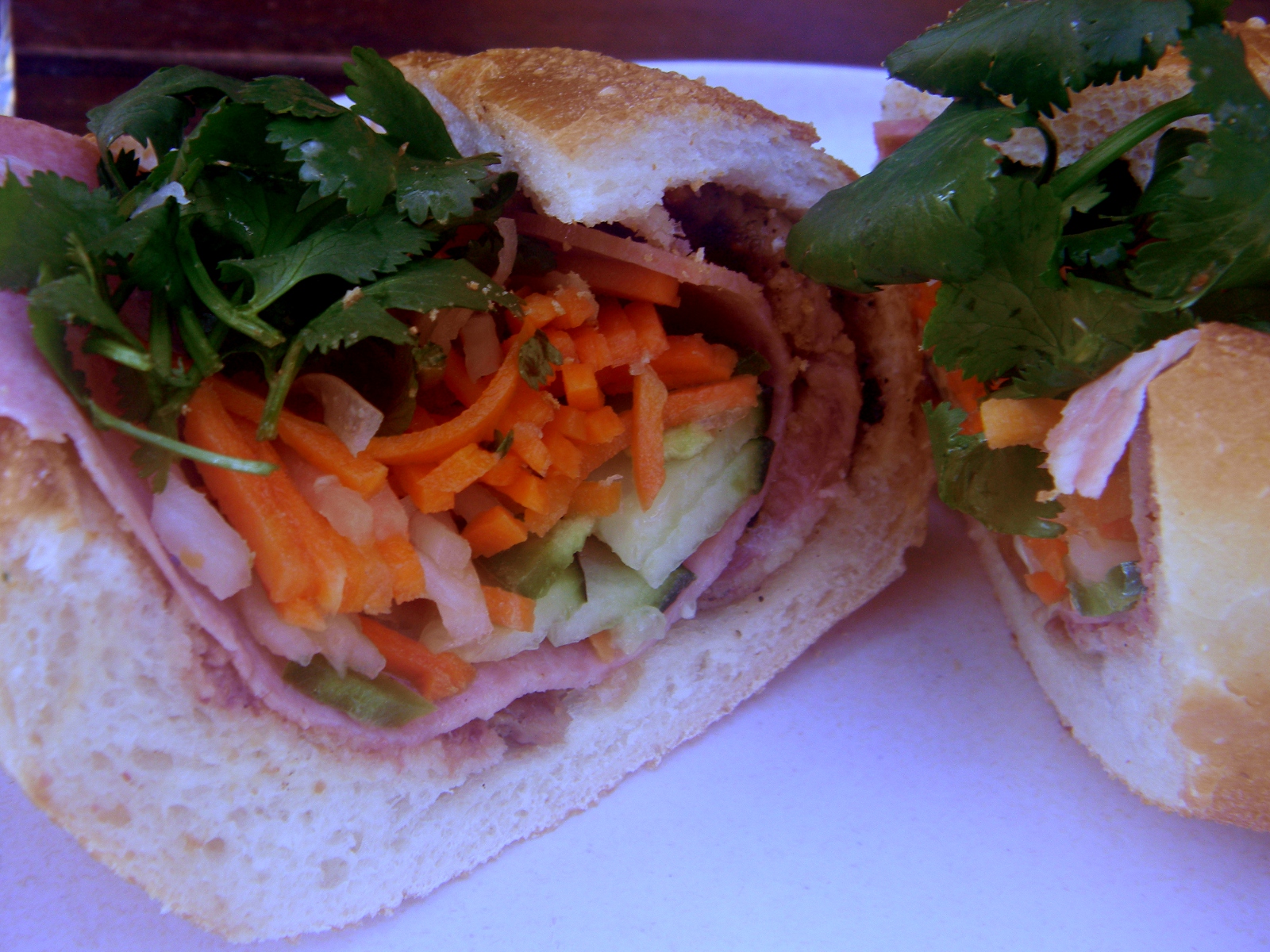
Saigon Vietnamese Sandwich Deli is a little more than 500 feet from my beloved Bánh Mì Saigon, literally around the corner. As I mentioned in the review of Paris Sandwich, I wanted to see what the neighborhood had to offer. My first sample of Chinatown’s other offerings left me underwhelmed, but Saigon Vietnamese was another story. To start with, this was a big sandwich. Most bánh mìs are six to eight inches, this one had to be at least ten and a good bit taller than most. Relatively speaking, it was a monster. That said, it wasn’t the size that got me thinking.


The #1 House Special at Saigon Vietnamese contains, in addition to the standard vegetables, nem nướng, thịt nguội, and chả lụa. This left me a bit confused, because there’s something a bit off in either the translation here or my understanding of bánh mì fillings. The thịt nguội and chả lụa were what I expected, cold-cut or cold-cut-esque meats previously discussed here and here, respectively. But I understood nem nướng to be pork patties, like I had at Bánh Mì Zớn. Here, though, they were minced. Not just in practice, but described as such on the menu. (The menu, to return briefly to a point made in the Bánh Mì Zớn review, is a series of 8.5×11″ pieces of paper taped above the counter.) Minced and grilled, the pork in this sandwich was much more reminiscent of thịt nướng, as found in my treasured #1 at Bánh Mì Saigon. It had a similarly chewy texture, and very similar sweet, salty, savory flavor. The primary contrast between the two sandwiches is that the pork at Bánh Mì Saigon has a heavier caramelization, and the pork at Saigon Vietnamese is more loose, more moist. Beyond description lies judgement, and I have to tell you that this was a very, very good sandwich. Crisp, tender bread, fresh, bright vegetables, and flavorful, tender meat. Making my way through the sandwich, I was struck with a thought: What if someone likes this better than Bánh Mì Saigon?

A number of associates, after hearing me sing its virtues, have gone to try Bánh Mì Saigon. To my knowledge, none of them have come away disappointed. I always fear that they will, though, because of the particular song I sing, so to speak. From the Finest Sandwich post:

This is a bánh mì from Bánh Mì Saigon, and it is the best sandwich in America. Now, I have not eaten every sandwich in America, and I do not aspire to. The conclusion that this sandwich is the best was not reached by poll, not by formula, not by proclamation. It simply is. The #1 from Bánh Mì Saigon is not an appeal to reason, it is an argument for sandwiches as a religion.

There isn’t much room to walk that praise back. I’m OK with that, I wrote the above because I believed it, because I meant it, because that sandwich showed me something no other sandwich had before or has since. This “what if someone else…” isn’t some act of cognitive dissonance attempting to distance myself from a realization that I might be wrong. My thinking was that Bánh Mì Saigon was better, but if someone valued different things (a moist softness over the celebration of the Maillard reaction that is the #1 at Bánh Mì Saigon, for example) they might feel differently. And that conclusion, that it was possible that the #1 at Bánh Mì Saigon isn’t the best sandwich in the world, was deeply unsettling.

It isn’t just that I would have to come before you and offer a mea culpa, or that my entire sense of what a sandwich can be would be thrown off. Both of those things would be true, but it’s more than that. Why that conclusion was unsettling isn’t about me, or even about the sandwiches. It’s about fault lines in the ground upon which we lay the bricks of certainty. How do I know the #1 at Bánh Mì Saigon is the best? I can’t explain it, it’s just something I knew when I ate the sandwich. I was made privy to a clarity, and what the sandwich at Saigon Vietnamese Sandwich Deli suggested was not that that picture had shifted, but that perhaps my eyes did not work as well as I thought they did.
Given that I can rely only on myself, my impressions and my understandings, to share the things I love with you, that notion is uncomfortable. Consider the tapestry that is the idea of “Best.” How difficult it is to see which thread is quality, which thread is context, which is luck? Is there novelty in the weave? Bias? This problem exists across criticism, and it prompts some to scurry in retreat, designating only a “favorite,” informing anyone who asks that they must make their own decisions. I would consider that an option of last resort, and it’s not one I will avail myself of today. No. Today I will tell you that this is the second best bánh mì I’ve ever had, that it is slightly too moist, and too tender. It is an exceedingly good sandwich, really, genuinely, very very good. But it was not as good as what I’ve had from Bánh Mì Saigon.

Bun Mee Combo & Juicy Steak – Bun Mee, Fillmore St, San Francisco, CA

Bun Mee is fancy. The pork they serve isn’t just pork, it’s Kurobuta pork, a particular breed. You can get Pellegrino, the menu and the building both feature sharp design, and the menu is full of treats, salads and fries. The sandwiches are expensive as well, from $6-8 compared to $3-4 at the other San Francisco establishments I’ve sampled. It’s closer to Cô Ba than any of the other places from the past month. The first sandwich I tried, the Bun Mee Combo, didn’t make me think much of the elaborate trappings. Aside from the standard carrot/daikon/cucumber/jalapeño/cilantro, the sandwich boasts grilled lemongrass Kurobuta pork, paté de campagne, mortadella, garlic aioli, and shaved onion. That last bit is over the top, I think. I’ve never tried to shave an onion, but I can’t imagine it going very well. Thinly slicing, sure, but never shaving. As if everything else weren’t enough, shaved onion strikes me as the final snap in the unfurling of a fancy flag. Fancy or not, though, this sandwich just wasn’t great. There was a lot going on, and none of it was really bad, but there was so much at play that nothing stood out. The garlic was lost behind the jalapeño and the richness of the paté, the lone slice of mortadella playing farther in the background than it should have. There was fair balance here, in that nothing blasted anything else away, but there was very little harmony, in that nothing seemed to be working together. Had this been the only sandwich that I tried, I would have had a fairly negative impression of Bun Mee.

Luckily for both myself and Bun Mee, I also tried the Juicy Steak. It was a revelation. With the same standards as above, the Juicy Steak held grilled flank steak with lime pepper aioli, lotus root relish, shaved onion, and crispy shallots. The steak lived up to its billing, moist, meaty and flavorful. The lotus root relish brought a delightfully earthy sweetness, echoed in the crispy shallots. This was far, far from a traditional bánh mì, but it was also very good. Bun Mee is the first place I’ve seen attempt and succeed at presenting an upscale bánh mì, and I have to say I’m very heartened by that success. The Combo might not have been special, but the Juicy Steak was and it left me very curious to try the other things Bun Mee has on offer. Given the vision of the future of the bánh mì on offer at Lee’s, Bun Mee was extremely heartening. Someone here knows what they’re doing, and the world of bánh mìs is richer for their contributions.

Roast Pork – Saigon Sandwich, Larkin St, San Francisco, CA

Saigon Sandwich Shop is spoken of as a hole-in-the-wall, but it’s really more of a place that just stuck their counter right at the top. There are a pair of seats facing out of the front window, but you’re really meant to take your sandwich and be on your way. That’s precisely what I did, picking the roast pork from the simple menu board and heading to a local park to enjoy. Before that, though, I watched the sandwich being assembled and wasn’t particularly thrilled with what I saw. Most bánh mì sandwiches have a bit of a rakish angle to their construction, built from the inside out on bread that isn’t sliced all the way through, this can have a negative impact. Sometimes it’s enough to just poke things around a bit and get a perfectly acceptable construction, but other times things stray too far from ideal and there’s no getting them back. Sing Sing was too far gone, and though Saigon Sandwich Shop was not, it wasn’t through the effort of the person putting it together. The construction was quite haphazard, with the sandwich being stuffed at lightning speed, a bunch of each ingredient grabbed with a pair of tongs and stuffed into the sandwich, only secured by the next bunch coming in after it. Luck was on my side, though, and the sandwich came together fine.

Perhaps the luck carried through from the construction, because this was a pretty good sandwich. The bread was some of the best I’ve had in a bánh mì, with a very strong crust but a moist, full bodied interior. Many bánh mì baguettes become efficient husks, minimalist wrappings to celebrated interiors. The baguette at Saigon Sandwich Shop stands up on its own. The meat was moist and there was plenty of it, and the mayonnaise had a nice flavor to it. The veggies & cilantro could have been more flavorful, but taken as a whole the sandwich had good balance and was mighty tasty. Eating so many bánh mìs the quality spectrum begins to blur, and it takes a particularly good sandwich to stand out. Saigon Sandwich Shop has just that kind of sandwich.

Grilled Pork – Paris Sandwich, Mott St, New York, NY

Paris Sandwich is around the corner from my beloved Bánh Mì Saigon, and was my first stop in the neighborhood. I hold the sandwiches at Bánh Mì Saigon in high regard, of course, and I was very curious to see what kind of sandwich shops made it their business to stand in direct competition to what I see as the finest possible sandwich. I wondered how they might attempt to set themselves apart, in what ways they might try to gain a leg up. One thing Paris Sandwich does is serve a lot more food. Where Bánh Mì Saigon serves sandwiches, spring rolls and a few dishes with noodles, Paris Sandwich has all that and more, with rice dishes, Vietnamese waffles, curries, all manner of things. One thing in particular that jumped out at me was, beside the listing of Vietnamese sandwiches (labeled as such), there was list of “Euro-Asian Sandwiches,” which contrasted the standard Vietnamese mayo, pickled carrot and daikon with American mayo, lettuce/tomato/onion and cheese. Lee’s offers American style sandwiches as well, but they seem to understand them as separate sandwiches, constructed in their own right sometimes on a baguette, but other times on a croissant. Paris Sandwich seemed to posit bánh mìs and these Euro-Asian Sandwiches as direct cousins. I tried to conceive of any of the fillings I’ve had on a bánh mì pairing with lettuce/tomato/onion and a slice of cheese, and the resulting mental picture was not a pretty one. Perhaps someday in the future I’ll give one a go, just to find out if it’s as off-putting as it seems to be, but it can certainly wait.

As for the sandwich I did have, Paris Sandwich proved no match for my favorite. The baguette was nice and crispy, but the pork had a strong teriyaki taste to it, a flavor I’d never before encountered in a bánh mì. The veggie mix was a bit out of proportion, leaving carrots overpowering everything else. This was a much better sandwich than I found at Sing Sing, but the conclusions remains the same; with better options just down the block, there’s no real reason to stop here.

Chả Lụa – Sing Sing Sandwich Shop, Hyde St, San Francisco, CA


Sing Sing was a bit of an odd experience. Stepping into the store, I saw a few tabl
es covered in plastic checkered table clothes a few scattered cigarette holes burned in each one. A refrigerated display case stood opposite the tables, stacked with foil logs marked chả lụa. The back wall of the room stopped three quarters of the way across, and behind it sat another room. It was unclear whether that was somewhere a customer might venture. Absent any staff and any further instruction, I just stood there a moment. Soon enough, someone came from behind the wall. “Yes?” they asked. I told them I’d like a sandwich. “Pork?” they asked. I told them pork was fine. “Stay or go?” they asked. I told them I’d take it to stay, and I sat down. They moved behind the refrigerator case, slid a baguette into a toaster oven and began to make my sandwich. That was it. No menu posted, no menu handed out. As far as I know, Sing Sing only serves one sandwich. Chả Lụa is pork roll, meat ground to a paste, flavored a bit, then wrapped in a banana leaf and steamed or boiled. It has the texture somewhat akin to roast beef, rather than the unsettling unified texture of a ham. The flavor is closer to a roast as well.

Sing Sing Sandwich Shop is located in “Little Saigon,” and that’s ultimately what damns the sandwich. It’s not very good, and given that there are much butter, significantly less disorienting options just down the street there’s no real reason to make this your destination. The typical bánh mì is usually loaded a bit skewed, but a bit of shifting a poke here and there set things right. Not so at Sing Sing, where one half of the sandwich had mayo and pate, and the other had cilantro and vegetables. Short of cracking the sandwich all the way open and reassembling it, I couldn’t figure out any way to keep from dealing with a bite of all mayo and pate, then a bite of all everything else. I have no doubt that chả lụa has its devotees, but I’m not one of them. A cold cut by any other name, in my estimation. Many a bánh mì has a crisp crust, but this was the first one that I’ve felt was genuinely sharp, sharp enough that a corner of the bread cut a small hole in the roof of my mouth. Should you ever find yourself on Hyde street, in the mood for a bánh mì, walk past Sing Sing. Or turn around. Or cross the street. Really, anything other than stepping inside should set you right.

Classic Vietnamese Sandwich – Vicky’s Vietnamese Sandwiches, E 2nd St, New York, NY

Vicky’s conception of classic is roast ground pork, Vietnamese ham, and pâté. That’s not what what I know as classic; perhaps it’s a regional thing. Regardless of whether it is or it isn’t, this sandwich won’t be ranking as a classic with me. As has become a refrain this month, it wasn’t bad but it wasn’t great. The roast pork was a texture I hadn’t come across in a bánh mì before, and I didn’t care for it. In contrast to Lee’s mushy meatball, it was a mealy rough texture. Both sandwiches miss the mark of contrasting crust and tender inside that one finds in a meatball or meatloaf, and these two strikes are enough to get me to steer clear of this sort of thing in the future. Meat in most bánh mìs is shredded, chopped or sliced, and it seems to me that ground isn’t an option that needs including. On the upside the ham had a nice bright flavor, the mayo was buttery, and the sandwich had a nice peppery flavor overall. It was also served piping hot, the hottest I’d ever had. A good bánh mì is warm, and this one didn’t lose anything by being warmer than the average. The more sandwiches one eats the more divergent one’s experiences will be, and as my list of shops gets longer, some places will have to find a place at the bottom. As it so happens, Vicky’s is one of those places.

Grilled Pork & Pork Meatball – Lee’s Sandwiches, E Santa Clara St, San Jose, CA

In my review of Bánh Mì Zớn, I spoke briefly about the future of the bánh mì. “It involves significantly more widespread availability,” I posited. “It involves evolution, offshoots and different takes. It involves franchises.” Lee’s is that future. With at least 41 domestic locations stretching from California to Oklahoma and a handful of international locations, Lee’s 20 years of existence have been fruitful, seeing the kind of rapid spread one might expect from the purveyors of fine sandwiches. The establishments seem built for expansion; there are bright, English signs, most stores are spacious and clean, they offer traditional American sandwiches as well as the standard offering of Vietnamese.

I’m not inherently opposed to the idea of a franchise. They’re not my preferred place to get a sandwich, but I think they serve a purpose and, evaluated on their own terms, they have a decent amount of value. A Big Mac tastes like a Big Mac no matter where you get it, no matter how long it’s been since you last had one, it’s always exactly what it was, exactly what you would expect. I can understand why some people find this objectionable, but I can also see the perverse appeal in it. So there’s a logic and a role to the franchise, even if it isn’t the most noble role around. Think about it; associates have written me as this month has progressed, bemoaning the lack of bánh mì options in places like Fort Wayne, Indiana. So if we hope that there will come a day when people in mid-range and far-flung corners of this country can get their hands on a delicious baguette full of well seasoned meat and fresh vegetables when they want them, can we really turn our noses up if it takes a homogenized, repetitive establishment to achieve that? I would say not.

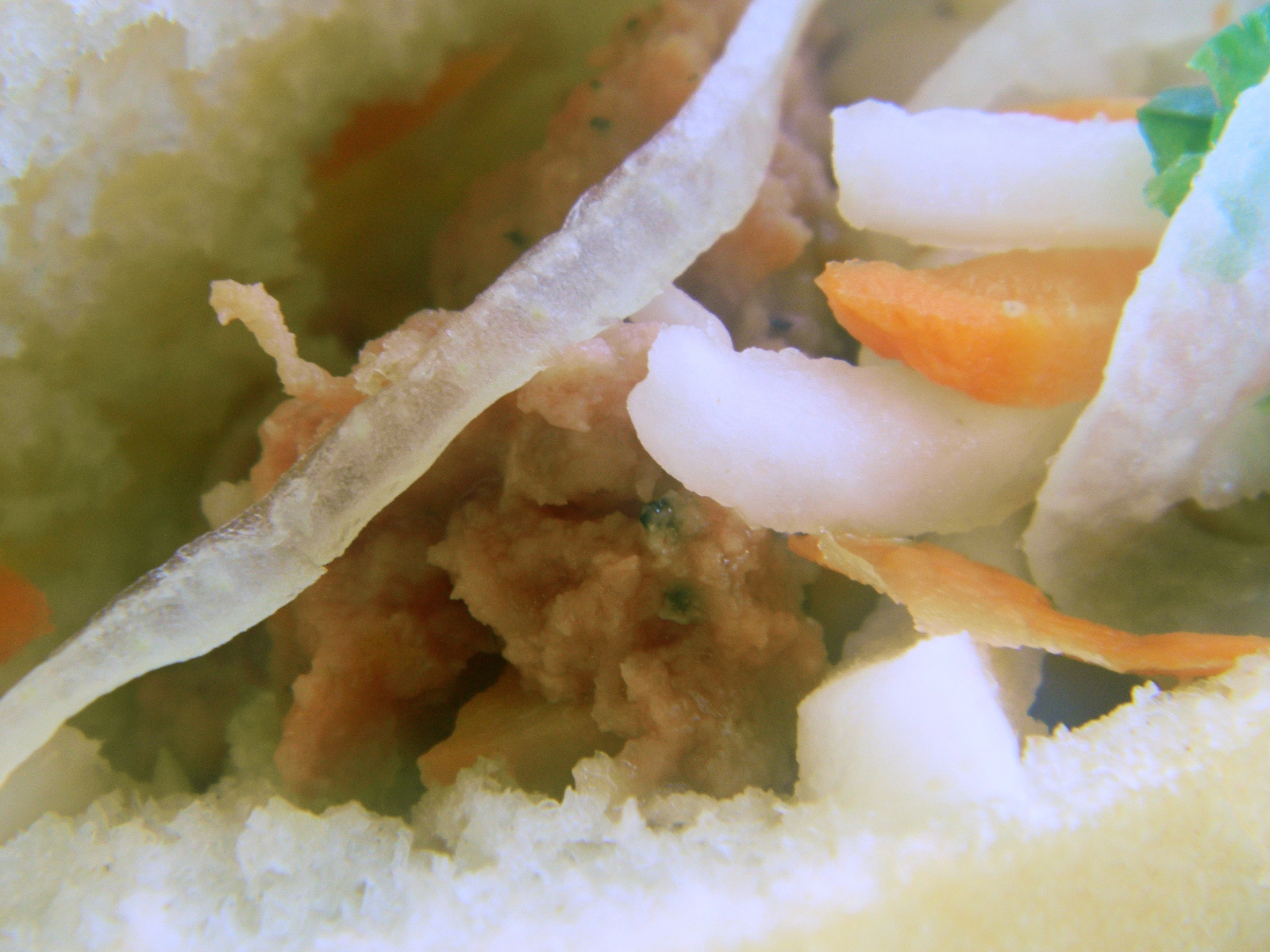
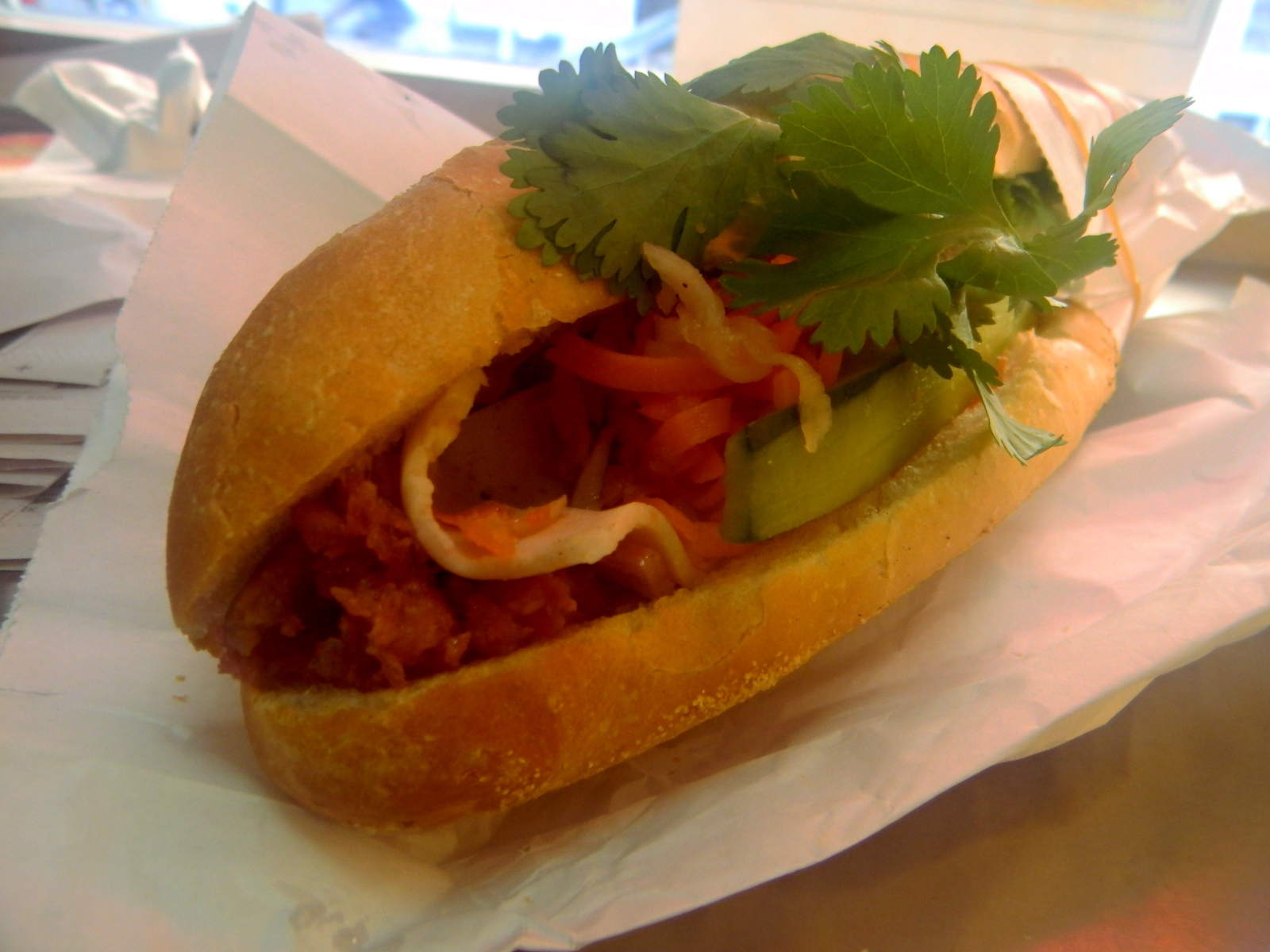
It is by these standards that Lee’s falls short, unfortunately. Lee’s started as a catering truck in San Jose, and I dearly wish I’d been able to sample the wares from that truck. That is a privilege that has thus far escaped me in life, to watch an establishment grow, changing over time, meeting advantages and disadvantages along the way. All I can do is examine the product as it stands today. And I would tell you how the product fares today, but tragically it all depends on from which Lee’s you order your sandwich. By design, the Lee’s franchises vary in three major ways. There are so-called production units, where baguettes are baked and ingredients prepared both for sandwiches sold on-site and to be distributed to other Lee’s in the surrounding area. There are non-production units, where these ingredients are received and then sent out again, and finally there are mall units, non-production units situated in food courts. As you might imagine, food quality is typically highest at a production unit, and it can vary considerably at other locations, based on their proximity to a production unit, their average sales volume, and who knows what else. So Lee’s falls short in what is perhaps the sole truly redeeming value of a franchise: consistency. Subway may charge you $5 for a big pile of salt, but it’s the same pile of salt every time. Even within a single Lee’s, the sandwiches vary considerably from day to day. The grilled pork sandwich pictured at the top of this page was flavorful and with a crispy baguette, a reasonably facsimile of a proper thịt nướng sandwich. But on other days the sandwiches have been dry, with tough baguettes and sparse filling. The second sandwich pictured is xíu mại, which had a texture not so much of broken up meatballs but just a mushy pile of meat, an extremely salty one at that.

Tragically, as the bánh mì makes its way in the larger world, the strongest wind in its sails is a sputtering one, one of inconsistent vision and execution. Maybe these are growing pains, and as Lee’s settles in things will start to smooth out. I suppose that’s a possibility, but that might be asking more patience than your average sandwich enthusiast can muster. I know that someday someone to whom I have extolled the virtues of the bành mì will try one and not be impressed. To my knowledge it has yet to happen, but it’s inevitable. While it would be disingenuous to deny the self-interest in that idea, it isn’t really about me. It’s about what I know about the bành mì, the heights I know a sandwich can reach, and my sincere desire that any and all interested persons experience those heights. Anyone who loves sandwiches deserves to have a really great bành mì. Lee’s works to put this farther out of reach, and for that I cannot forgive them.

Thịt Nướng & Gâ Châ Bóng – Dakao, E San Salvador St, San Jose, CA

Having reached the middle stretch of a month of bánh mì, I find myself presenting sandwiches about which I do not have a tremendous amount to say. In other contexts I might simply elect to not say anything, as it is never my intention to bore readers or to waste their time. But Dakao is one of the few bánh mì options in downtown San Jose, so it probably justifies a few words. Thankfully, given that it is one of the only available options, Dakao makes a decent sandwich. It’s nothing spectacular, another establishment coasting on the high floor of the bánh mì, but it’s good enough. The pork was tasty but a bit sparse, leaving a sandwich where some bites were all flavorful pork and some were mostly Vietnamese mayonnaise.

The main fault with the shredded chicken lay with its lack of flavor, as it comes in a bit bland. All things considered, especially that you can get a sandwich for less than three dollars, the sandwiches are good enough, and some days that’s all you get.

Chinese BBQ Pork & Shredded Pork – King Egg Roll, Story Rd, San Jose, CA

I spoke a bit about authenticity and neighborhoods here, and more recently I was grousing about a bánh mì I felt was overpriced. What today’s post goes to show, though, is that neither location nor price are legitimate markers of quality. They may be clues, but in the end only in trying the sandwich can one find its true measure. King Egg Roll is on the Vietnamese side of San Jose, and the sandwiches are a steal at $2.50 each. The problem, though, is that they just aren’t that good.

The bánh mì is somewhat unique in that as a concept it possesses both a very high ceiling and a fairly high floor; there exist truly bad bánh mìs, but they’re somewhat rare. The sandwiches at King Egg Roll aren’t bad, they just aren’t good. As you might surmise from the name, sandwiches aren’t the main attraction at King Egg Roll. Fried rolls and shrimp balls get top billing, and sandwiches appear to be an afterthought. Perhaps someone took the high floor concept for granted, and figured any old sandwich they slapped together would excel. That wasn’t the case, but it’s a testament to the sandwich (as a concept, not in this example) that I still left King Egg Roll satisfied. The BBQ pork was a bit dry, and the shredded chicken not particularly flavorful, but a bit of chili sauce gave both some extra kick. Altogether, it’s just tough to go wrong. For $2.50 you get a balanced sandwich on a crusty roll. There isn’t much room in there for complaint.